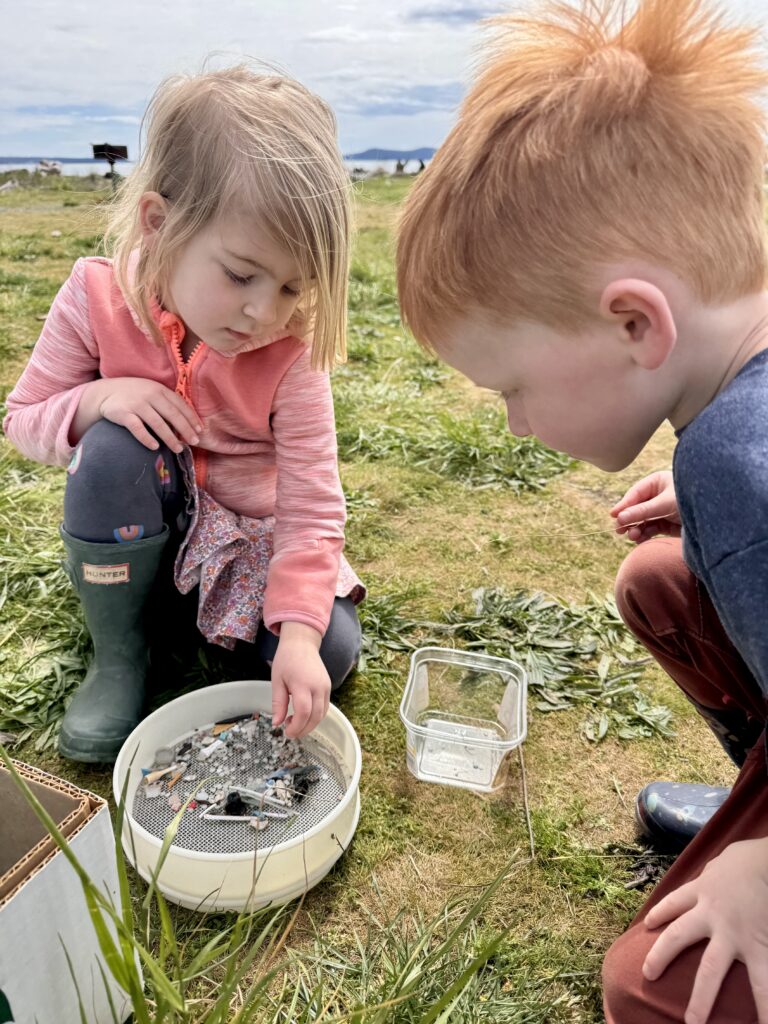
If you’ve walked a beach in the San Juan Islands recently, you may have seen small, round plastic pellets mixed into the sand. These are nurdles—the raw material used to manufacture nearly all plastic products. About the size of a lentil, nurdles are easy to overlook, but they represent one of the most widespread and persistent forms of plastic pollution in the marine environment.
Nurdles enter the ocean through spills during manufacturing, transport, and handling. Once released, they travel long distances on currents, accumulating on shorelines and in marine habitats. They are nearly impossible to fully remove, readily absorb toxic chemicals, and are often mistaken for food by fish, seabirds, and other wildlife.
This is not an abstract issue—it’s happening here.
Local Action: Nurdle Hunts in the San Juan Islands
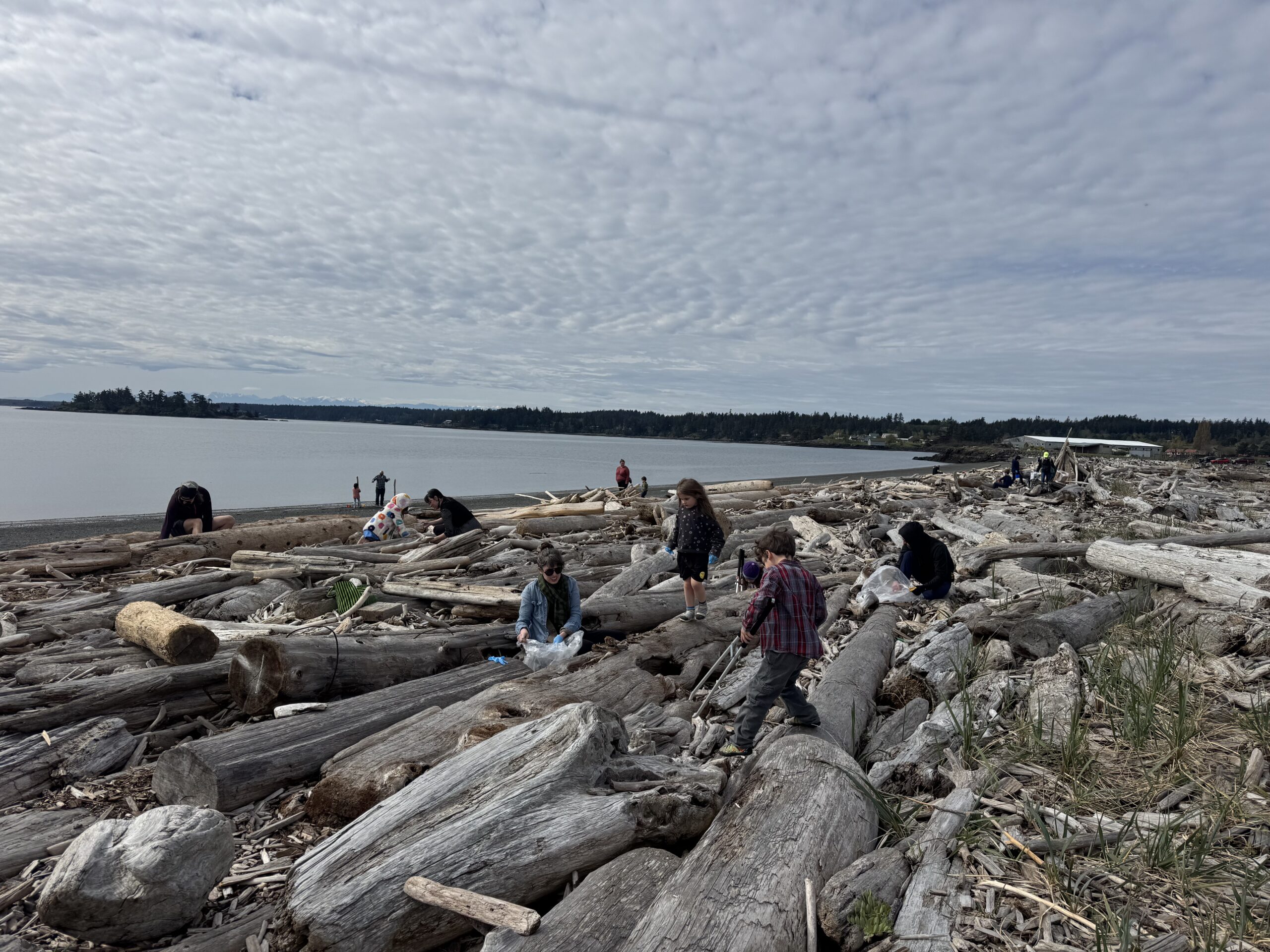
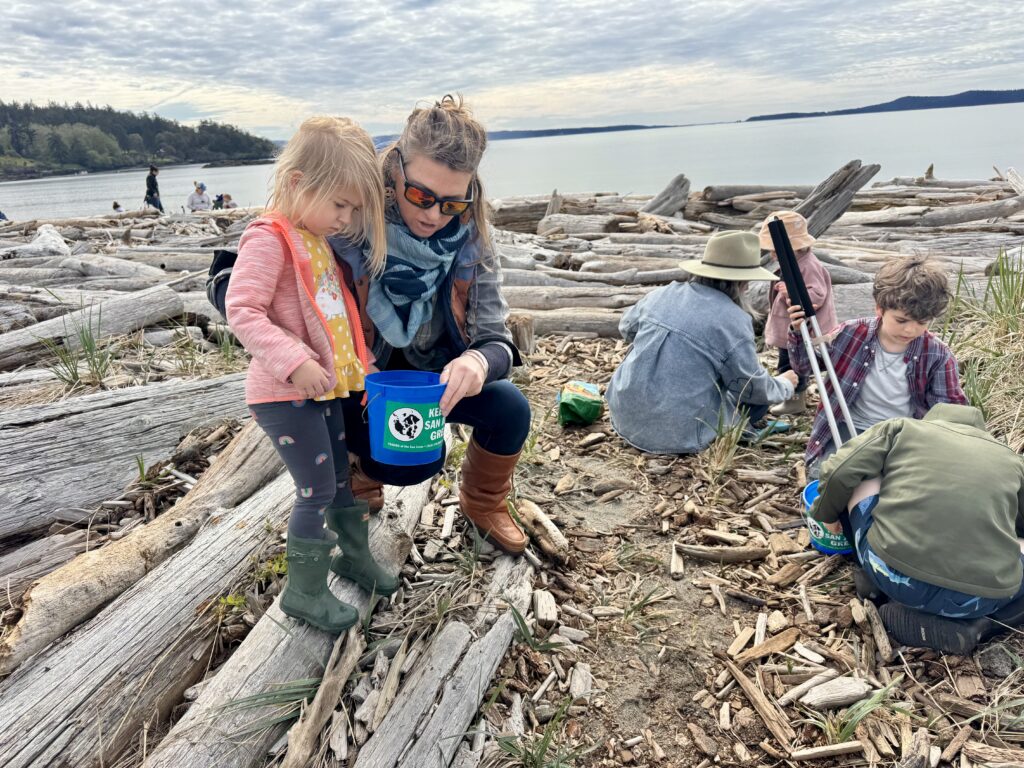
At Friends of the San Juans, we’ve been mobilizing community members to take direct action through organized nurdle hunts. These events combine shoreline clean-up with community science, giving participants the tools to identify, collect, and document nurdles found along our beaches.
Nurdle hunts serve several purposes:
- Immediate impact: removing thousands of plastic pellets from sensitive shorelines
- Data collection: contributing to a growing understanding of where nurdles accumulate and how they move
- Public awareness: helping people recognize nurdles and understand their broader environmental impact
What stands out most is how quickly people connect to the issue. Once you’ve spotted nurdles, you start seeing them everywhere—and that awareness changes behavior.
From Awareness to Prevention
Cleanups are necessary, but they are not sufficient. Because nurdles are so small and so mobile, the only effective long-term solution is preventing them from entering the environment in the first place.
That’s where policy and industry accountability come in. Friends is actively working to advance solutions that reduce plastic pollution at the source, including efforts tied to cleaner shipping practices and stronger safeguards for handling plastic materials.
But systemic change also depends on public pressure—and that’s where community action scales.
Take the Nurdle Pledge
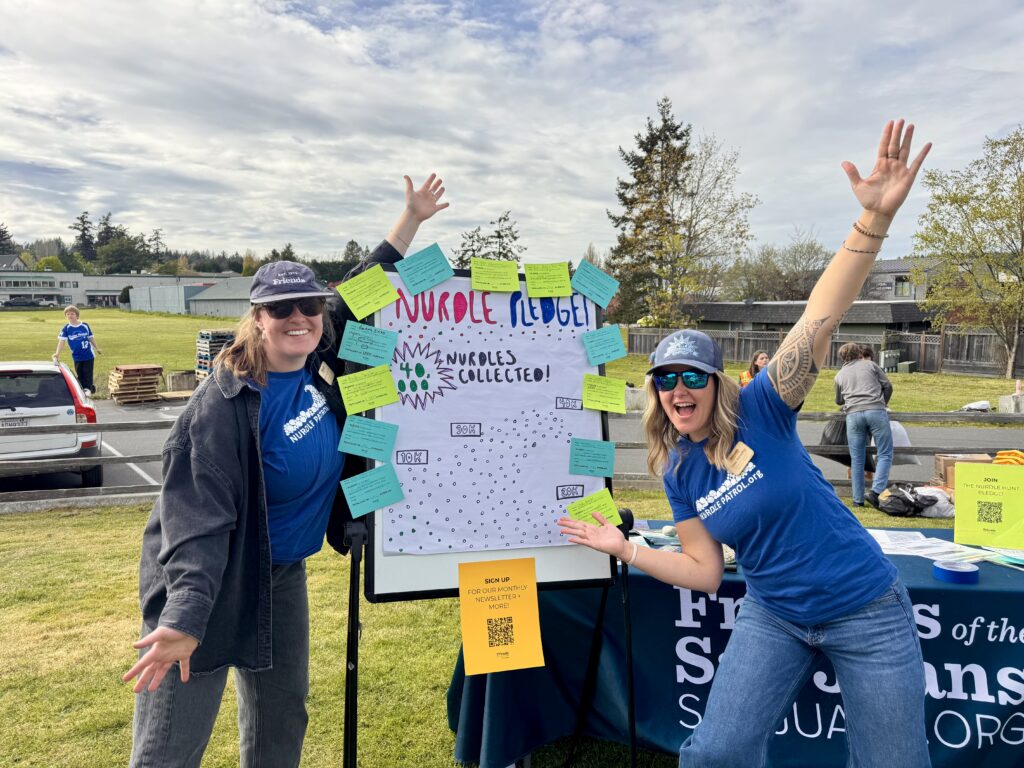
To build that momentum, we’re asking community members, businesses, and partners to take the Nurdle Pledge.
The pledge is a simple but meaningful commitment to:
- Reduce reliance on single-use plastics
- Support policies that prevent plastic pollution at its source
- Raise awareness about nurdles and their impacts
- Take part in community science and clean-up efforts
Individually, these actions may seem small. Collectively, they signal demand for change and reinforce the expectation that plastic pollution—at any scale—is unacceptable.
What Comes Next
We will continue hosting nurdle hunts across the islands, expanding opportunities for people to get involved directly. At the same time, we are working to connect local data and community engagement to broader regional and policy efforts aimed at stopping pollution before it starts.
This is a solvable problem, but it requires alignment: community awareness, sustained engagement, and upstream solutions.
If you’ve joined a nurdle hunt already, thank you. If not, there will be more opportunities ahead.
And wherever you are starting from, taking the pledge is a concrete step toward protecting the Salish Sea. You can stop by the Friends office at 650 Mullis Street anytime to drop off your nurdles to add to the pledge collection! Leave the counting to us!