
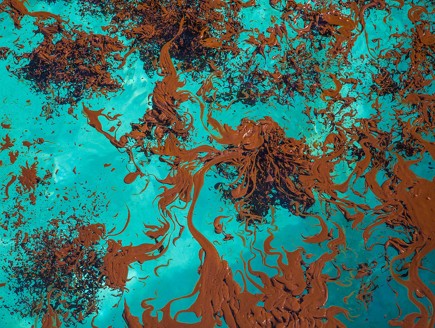
Oil tanker traffic is on the rise, increasing the risks of shipping accidents and major oil spills in the Salish Sea. Notably, tanker traffic that is exporting Canadian tar sands crude could increase by 591 transits per year.
Canada has multiple proposals in the works that could have devastating impacts for the Salish Sea:
• A New Canadian Pipeline to Increase Crude Oil Exports by 1 Million Barrels Per Day
• Further expansions of the Trans Mountain Pipeline expansion project from 890,000 to 1,190,000 barrels per day.
• Canada’s proposal to expedite the permitting of major projects, bypassing critical safeguards in the Species at Risk Act
A New Canadian Pipeline Would Increase Crude Oil Exports by 1 Million Barrels Per Day
Canada is fast-tracking a new one-million-barrel-per-day pipeline that will follow the existing Trans Mountain pipeline corridor to Roberts Bank, just north of the US-Canadian border. Roberts Bank and the Fraser River Delta are critical habitat for Southern resident killer whales and support the largest remaining salmon runs in the Salish Sea. Over 260 species of birds rely on the Fraser River Delta to nest, overwinter, or refuel during long seasonal migrations along the Pacific Flyway.
Very Large Crude Carriers will be used for export. This would add one Very Large Crude Carrier exporting approximately two million barrels of tar sands crude oil every other day, or at least 365 transits per year through the Salish Sea. Very Large Crude Carriers range from 200,000 to 320,000 deadweight tons and are prohibited in Washington State – RCW 88.16.190 Oil tankers—Restricted waters—Requirements: (1) Any oil tanker, whether enrolled or registered, of greater than one hundred twenty-five thousand deadweight tons shall be prohibited from proceeding beyond a point east of a line extending from Discovery Island light south to New Dungeness light, unless authorized by the United States coast guard, pursuant to 33 C.F.R. Sec. 165.1303.
The new marine export terminal would include two deep-water berths and 15 crude oil storage tanks totaling 6.5 million barrels, covering about 260 hectares/642.47 acres, which is about one square mile or 485 football fields (including the end zones).
By routing the new pipeline to Roberts Bank, Canada is upholding its oil tanker ban in northern BC. While they are preserving protections for one environmentally sensitive coastline, they are shifting oil tanker impacts and risks into another environmentally sensitive coastline and inland sea that includes Washington waters, Southern Resident killer whale critical habitat, Tribal Treaty resources, and communities, economies, and cultural and environmental resources on both sides of the border.
Further expansions of the Trans Mountain Pipeline expansion project from 890,000 to 1,190,000 barrels per day
In May 2024, the Trans Mountain Pipeline Expansion project was completed, increasing export capacity from 300,000 barrels per day (bpd) to 890,000 bpd. Canada is now proposing an additional pipeline expansion, to 1.19 million bpd. The expansion would include dredging 25,000 cubic meters (m3) of sediments to accommodate larger ships and increase export capacity. The dredging will expose marine habitats to contaminants lodged in the dredged material. The expansion would also include increasing throughput by 60,000 bpd in Trans Mountain’s Puget Sound pipeline that delivers tar sands crude oil to Washington’s four northern refineries: BP Cherry Point, Phillips 66, HF Sinclair, and Marathon Petroleum.
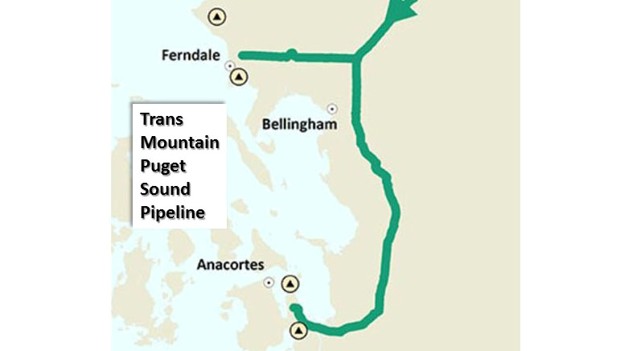
According to the Washington Department of Ecology, the pipeline already poses a risk to the Salish Sea because it crosses the Nooksack River twice, the Samish River, Swinomish Channel, and many creeks along the east side of Padilla Bay. In addition to disrupting these watersheds, enhanced throughput for the Trans Mountain Pipeline puts sensitive marine and coastal ecosystems at risk as transshipment exports through the Salish Sea are projected to increase along with pipeline capacity.
Canada’s proposal to expedite the permitting of major projects, bypassing critical safeguards in the Species at Risk Act
Canada is considering changes that would allow major industrial projects to bypass a critical safeguard in Species at Risk Act (SARA) in order to expedite permitting for pipelines, ports, and other major transportation infrastructure. By allowing projects to move forward more quickly, the proposal could weaken protections for endangered species and marine ecosystems, including critically endangered Southern Resident killer whales.
Decisions made in Canada directly affect the whales Washington communities are working to protect. With only 74 individuals remaining, this population is already under intense pressure from limited prey, vessel traffic—including toxic discharges, underwater noise, and ship strikes—and pollution in their home waters. Weakening SARA could further increase these threats.
Your voice is needed. Speak up by July 22!
In June 2026, Friends submitted a comment letter urging Canada to maintain SARA’s protections for projects that would affect crude oil exports through the Salish Sea. The comment deadline has been extended to July 22. Send a message to the Clerk of the Privy Council and Secretary to the Cabinet of Canada—it only takes a minute. See Friends of the San Juans’ Comment Letter on upholding protections for endangered species in Canada.
Impacts from Canadian Crude Oil Exports
A major tar sands crude oil spill from these project expansions would be catastrophic.
Canada’s tar sands contain some of the world’s largest crude oil reserves. Extracting the bitumen—a heavy, sticky form of crude oil found in sand and clay deposits—requires large amounts of heat or chemical diluents, making its life‑cycle emissions roughly 15–30% higher than conventional oil. Research has also shown that actual pollutant emissions of crude oil extraction can far exceed reported levels, intensifying climate and air‑quality impacts, while increasing marine and aquatic contamination.
The extraction process produces toxic tailings stored in vast ponds that leak into surrounding ecosystems, affecting groundwater, wildlife, and the health and food sources that communities rely on. Once diluted, the bitumen—also known as dilbit—is transported through pipelines, where it is loaded onto oil tankers that use the Salish Sea as an export route.
An increase in oil tanker traffic would increase the risk of a major spill, which would cause economic, cultural, and ecological losses that would extend across generations. The repeated re-suspension of submerged and sunken oil could re-expose ecosystems over time, and oil residues can remain in sediments, shoreline, and benthic habitats for years to decades, continually releasing toxins. Marine species from shellfish to salmon to orcas would face population-level impacts. This new pipeline proposal, along with further expansions of the Trans Mountain pipeline, could result in long-lasting and cumulative climate, ecological, economic, and cultural impacts.
A 2014 United States Coast Guard report on diluted bitumen oil spills addressed the uncertainty of behavior, compounded by the volatile and toxic chemicals that are mixed with bitumen, which complicates spill response. “The initial portion of an oil sand product response would emphasize minimizing public and responder hazards from light VOCs [volatile organic compounds] that would volatize in the first several hours/days of the event.” According to a 2022 National Academies of Sciences, Engineering, and Medicine report, the behavior of a major diluted bitumen oil spill in marine waters is still unknown.
How Friends is Addressing this Threat
New Canadian Pipeline to Increase Crude Oil Exports by 1 Million Barrels Per Day:
With the recent announcement that Canada is fast-tracking a new crude oil pipeline from Alberta to the west coast, Friends is helping to rally opposition of this pipeline to protect the Salish Sea and all that rely on this fragile ecosystem.
Trans Mountain Pipeline expansion
Friends of the San Juans’ opposition to the Trans Mountain Pipeline Expansion project and its increase in oil tanker traffic in the Salish Sea dates back to 2014 when our first comment letter was sent to Canada’s National Energy Board (NEB) in response to the proposed expansion from 300,000 bpd to 890,000 bpd. Friends documented impacts to the transboundary Salish Sea, including communities in Washington State, from the expansion’s increase in oil tanker traffic and the associated increase in accident and oil spill risk.
Throughout the permitting process, Friends provided outreach to our members, the public, and elected officials educating them about the environmental risks and impacts of the expansion, encouraging them to submit their own comments to Canada’s NEB opposing the project. As the project escalated, Friends signed onto a comment letter sent by Washington State Environmental Nongovernmental Organizations (ENGOs) to U.S. members of Congress that regularly engage in bilateral consultations with Canada expressing concerns with the Trans Mountain Expansion Project.
In March 2026, Friends of the San Juans was joined by 12 nongovernmental organizations that work in Washington State on environmental and public health and safety issues in submitting comments opposing the proposed Burrard Inlet dredging project that would significantly expand Trans Mountain exports throughout the Salish Sea.
Friends is monitoring and engaging in all permitting related to the expansion of Trans Mountain’s Puget Sound pipeline. Friends submitted comments with five Washington State environmental and public health organizations on a recent application submitted by Trans Mountain to the Northwest Clean Air Agency. Trans Mountain recently withdrew that permit application. Friends also submitted comments on another Puget Sound pipeline project in 2024. Friends is also tracking the expansion of Canadian tar sands crude oil exports and is dedicated to leveraging all available resources to limit increases in oil tanker traffic and oil spill risks in the Salish Sea.
Additional Information
- Friends of the San Juans’ Comment Letter Opposing the Second Narrows (Burrard Inlet) Dredging Project
- ENGO 2026 and 2024 Comments Related to the Proposed Expansion of Trans Mountain’s Puget Sound Pipeline
- Friends of the San Juans’ 2014 Trans Mountain Pipeline Comment Letter and Associated Materials sent to Canada’s National Energy Board
- Canada’s Proposed Permitting Reforms to Expedite Major Projects
- Canada’s Push for a New Crude Oil Pipeline
- History of the Trans Mountain Pipeline
- The Government of Alberta’s west coast oil pipeline submission and plain language summary of the submission
How You Can Help
This work requires constant and diligent attention. Friends of the San Juans is grateful for the support of our donors and foundation partners. We welcome your financial support of this work. Join us and donate today.