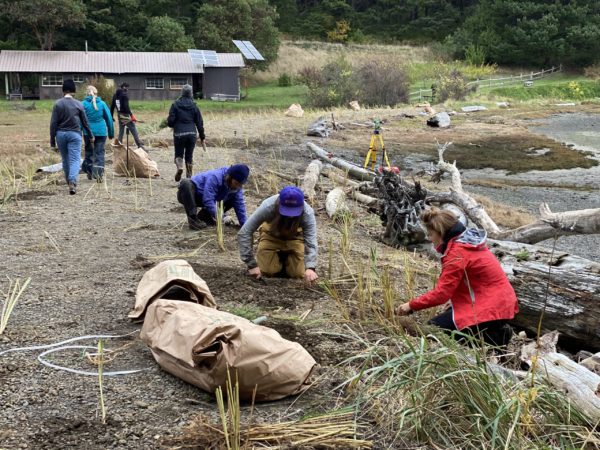
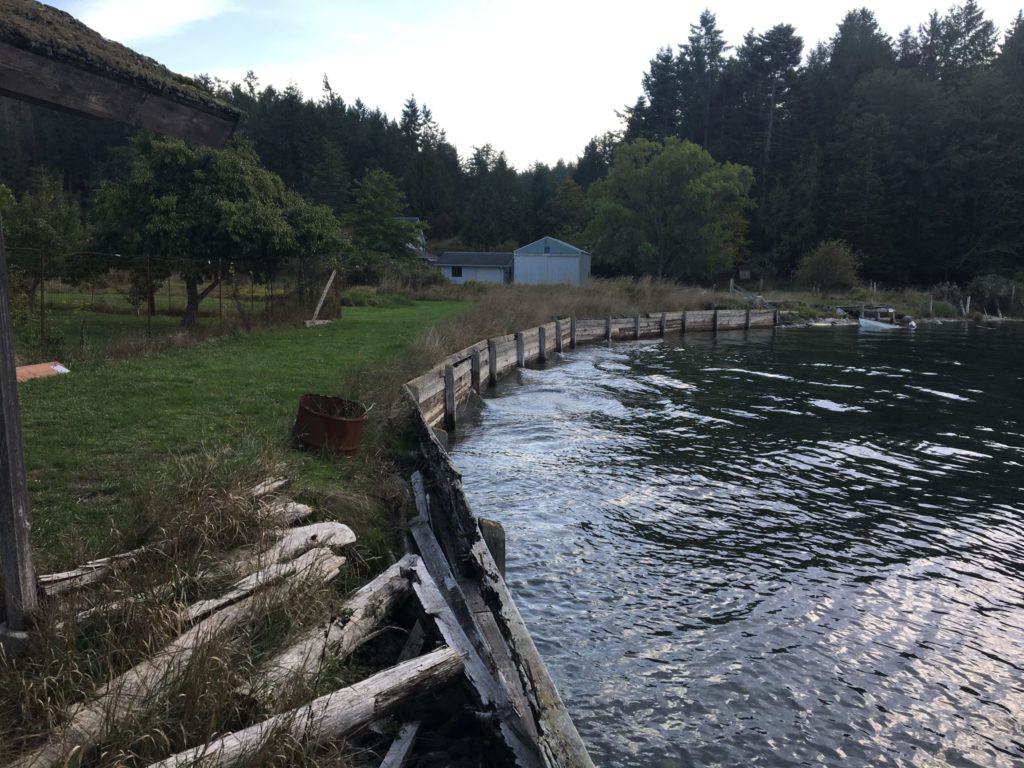
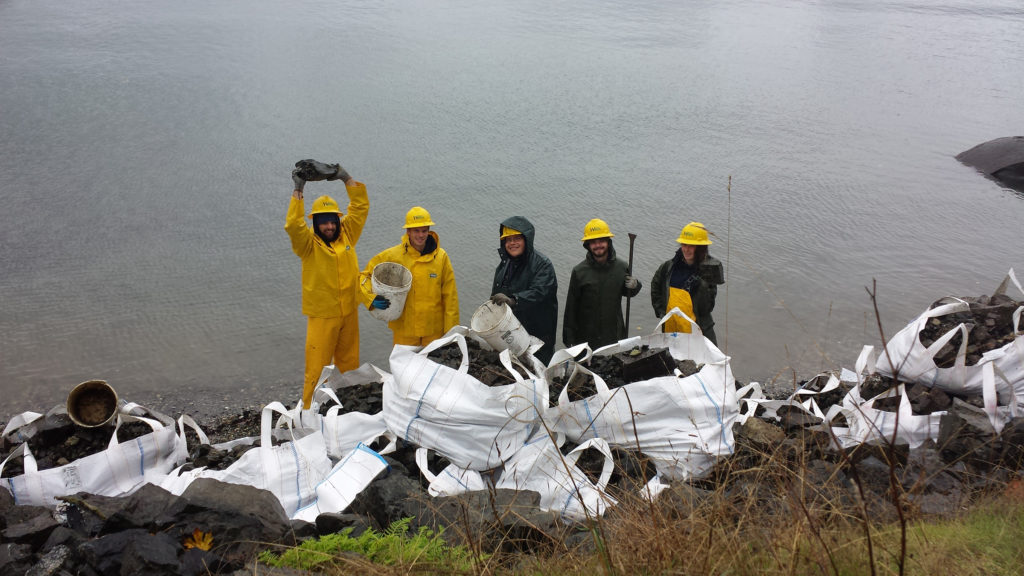
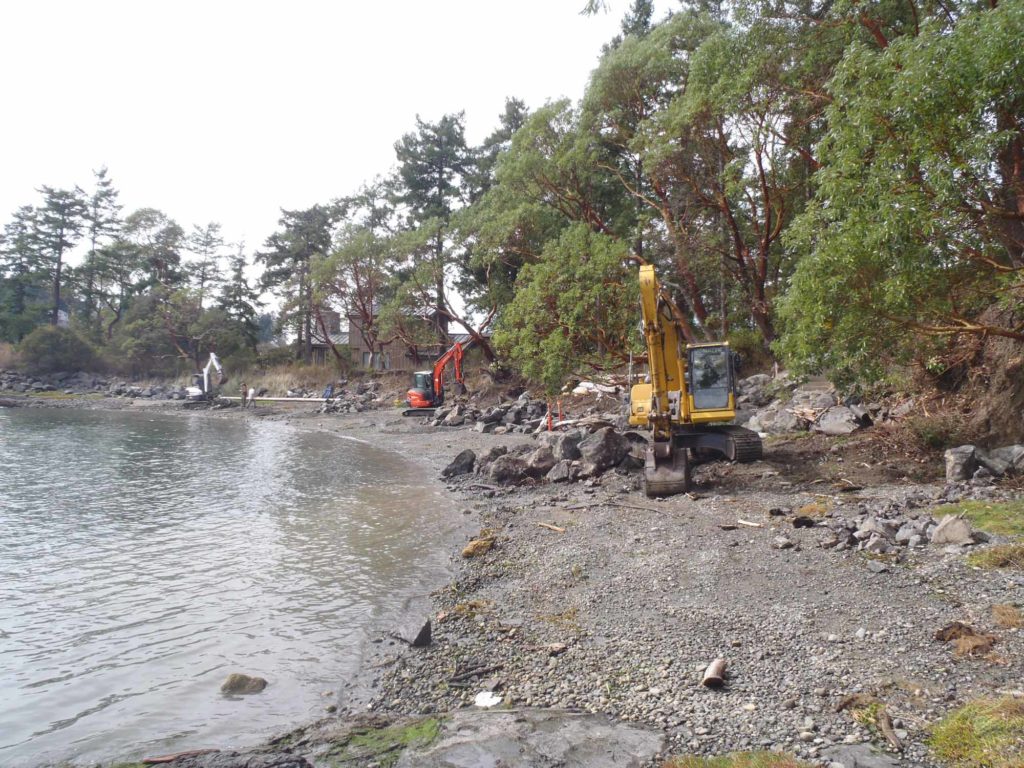
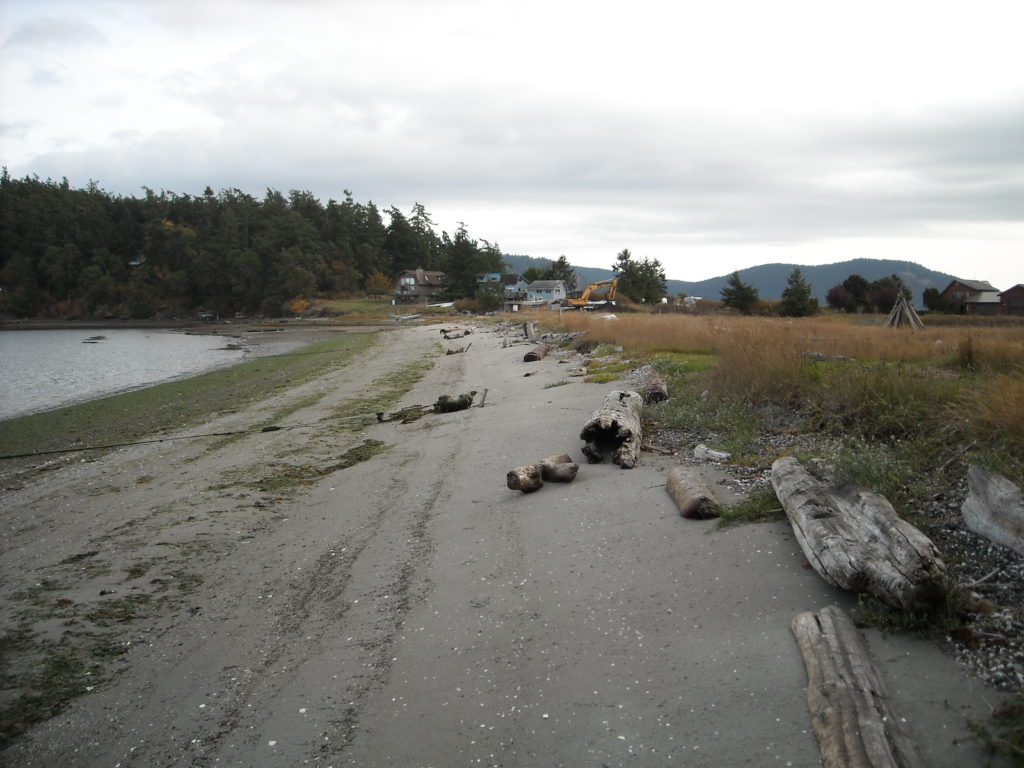
The Mud Bay Wetland and Beach Restoration on Sucia Island removed nearly 300 feet of old road and armoring to reconnect a salt marsh and restore a forage fish spawning beach. This restoration now supports migrating juvenile salmon, forage fish, and the wider marine food web.
Friends of the San Juans is restoring marsh and beach habitat at Fisherman Bay on Lopez Island, improving shoreline function, enhancing wildlife habitat, and supporting long-term coastal ecosystem resilience.
Friends of the San Juans worked to restore degraded beach habitat at Broken Point on Shaw Island, enhancing natural shoreline processes and improving conditions for forage fish and other marine species.
Friends of the San Juans is restoring forage fish spawning habitat at Blind Bay on Shaw Island, improving beach conditions that support herring and other key species vital to the Salish Sea ecosystem.
Friends of the San Juans worked to restore degraded beach and bluff habitat on Brown Island, stabilizing eroding shorelines, improving ecological function, and supporting long-term resilience for coastal ecosystems.
Friends of the San Juans is restoring forage fish spawning habitat on Lopez Island, improving beach conditions that support herring and other key species essential to the Salish Sea ecosystem.
Attention island residents located near herring spawning grounds! Pacific herring – also known as forage fish – play a key role in marine food webs as food for out-migrating juvenile salmon, seabirds, and even marine mammals. Herring rely on sensitive eelgrass meadows found along our tidelands to spawn and incubate their eggs. Herring spawning populations…
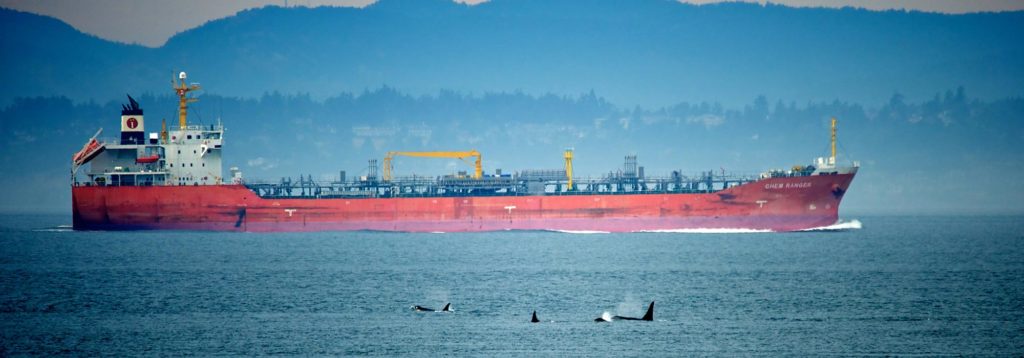
A major victory for the Salish Sea: plans to manufacture and export toxic xylene from the Anacortes refinery were withdrawn after years of community advocacy and legal action. The decision prevents increased tanker traffic and reduces risks to orcas, marine ecosystems, and shoreline communities.
A package of Washington State bills aimed at protecting endangered Southern Resident killer whales has passed the legislature. These measures address key threats—including vessel disturbance and habitat impacts—to support orca recovery in the Salish Sea.
Since 2014, we have been sending letters to Canada’s National Energy Board (NEB) to protect our shorelines and the Southern Resident Killer Whales from the Trans Mountain Pipeline Expansion project. The increased risk of diluted bitumen (dilbit) Alberta Tar Sands crude oil spills in our waters and the Southern Residents’ critical habitat is not justified…