The Federal Endangered Species Act (ESA) passed in 19731, and has long been hailed as one of the country’s most important tools for protecting wildlife, plants, and, up until recently, the places these species need to survive. Congress’s intent in putting together this act was to provide comprehensive protection for endangered and threatened species, including “to provide a means whereby the ecosystems upon which endangered species and threatened species depend may be conserved.”2 Congress recognized the primary driver of species extinction as “economic growth and development untempered by adequate concern and conservation.”3
1–3 U.S. EPA, Summary of the ESA; 16 U.S. Code §1531(b); 16 U.S. Code §1531(a)(1).
Essentially, the ESA gives people and organizations a way to request the federal government protect a species that may be at risk or imperiled. When someone files a petition to list a species as endangered or threatened, the request goes through a careful, science-based review, with opportunities for the public to comment, before the government makes a final decision.
If a species is listed, the ESA does more than simply put the species’ name on a list. ESA listing can trigger critical habitat designations, recovery planning, scientific review, public participation, and coordination among federal, state, tribal, and local officials. Wildlife populations are monitored over many years to see whether conservation efforts are working, and when a species has recovered enough that it no longer needs federal protection, it can be removed from the endangered and threatened species list.
The ESA generally prohibits the “take” of listed species.4 To “take” a listed species means “to harass, harm, pursue, hunt, shoot, wound, kill, trap, capture, or collect” it, “or to attempt to engage in any such conduct.”5 Congress intended this prohibition to be interpreted broadly to include “every conceivable way in which a person can ‘take’ wildlife.”6 For decades, federal regulations defined “harm” to include acts or omissions that actually injure or kill wildlife by significantly disrupting essential behavioral patterns such as breeding, feeding, or sheltering, including significant habitat modification or degradation that has those effects.7
4–7 §1538(a)(1)(B), 50 C.F.R. §17.21(c); 16 U.S.C. §1532(19); S. Rep. No. 93-307 (1973); Babbitt v. Sweet Home Chapter, 515 U.S. 687 (1995).
On July 14, 2026, however, the National Marine Fisheries Service (NMFS) and the United States Fish and Wildlife Service (FWS) finalized a rule rescinding the decades-old regulatory definition of “harm.”8
The change removes language that treated significant habitat modification or degradation as harm when it actually kills or injures listed wildlife.9 The new interpretation of the term “harm” is limited to direct, intentional actions, such as shooting an animal, and does not apply to degradation or destruction of ESA-listed species’ habitat that kills or injures members of that species.10
8–10 91 Fed. Reg. 43300; Federal Register, July 14, 2026; 91 Fed. Reg. 43306.
The administration says the rule returns ESA enforcement to the text of the statute, reduces regulatory burdens, and leaves other ESA protections in place.11 Tribes and conservation groups argue the change weakens one of the law’s most important tools because species cannot recover if the places they rely on for food, shelter, breeding, and migration are destroyed.12
11–12 91 Fed. Reg. 43306, id.; Swinomish Indian Tribal Community et al. v. NMFS & FWS; Center for Biological Diversity et al. v. Burgum et al., Complaints, July 14, 2026.
Because recovery depends on many factors—including habitat, food availability, reproduction rates, climate conditions, and sustained conservation support—the impact of the new rule will likely be detrimental to many of the listed species. The rollback of the “harm” definition could make habitat protection harder to enforce in some situations, especially where harm to a species comes through the loss or degradation of the places that species needs to survive.
The federal shift raises an important follow-up question: if the ESA no longer reaches some habitat-damaging conduct through the definition of “harm,” what tools remain available at the state level to protect endangered and threatened species in Washington?
a. Washington State’s Ability to Protect Endangered and Threatened Species
Washington covers its Endangered Species regulations in RCW 77.15.12013 (enforcement), and under WAC 220-61014 in more detail. These two sets of state regulations are meant to fill gaps in the federal ESA, not to create Washington’s own Endangered Species Act. Instead, the way the state regulations function is by building a multi-layered system that prevents legal loopholes and allows the state to enforce federal rules at a local level. Because the state’s regulations are meant to serve as gap fillers to the federal ESA, without a more comprehensive interpretation of “harm”, Washington state laws may fall short of protecting some of the endangered species in the state. What is missing from Washington’s own regulations is the fact that the regulations do not cover plants the way federal ESA does, the regulations have no broad prohibition on habitat destruction; they lack mandatory recovery planning, and that there is no equivalent, binding state-agency wide consultation process.15
13–15 RCW 77.15.120; WAC 220-610; ESA Sec. 7.
Unlike regulations at a state level, federal rules ensure consistent protection for species and habitats for all life stages for species and across state boundaries; specifically for species like salmon and Southern Resident Killer whales (SRKWs) that move between states. Unfortunately, though Washington state regulations may fill the gaps, there is no guarantee that other states will do the same. Furthermore, review of federal agencies’ own project actions would be impacted, as would the federal technical and financial engagement in ESA habitat protection efforts. Finally, federal review, at the NEPA16 and ESA level, is where Tribes have the opportunity to engage the federal government in government-to-government consultation, which is now being limited by the change in the definition of “harm”.
16 40 CFR 1501.10(d)(9).
b. Impacts to Washington State Species
The NMFS and FWS’s new definition of “harm” will diminish and allow damage to ESA listed species’ habitat and is likely to reduce the requirement for regulated parties to provide habitat protection as mitigation for incidental take. These changes in turn will diminish the populations of ESA-listed species and impede recovery.
This means that developers, logging companies, and land managers may face less federal liability when their activities damage habitat, even if pollution, logging, or wetland destruction ultimately kills or injures members of an ESA-listed species. In practice, habitat destruction can be just as deadly to threatened and endangered species as direct physical harm.
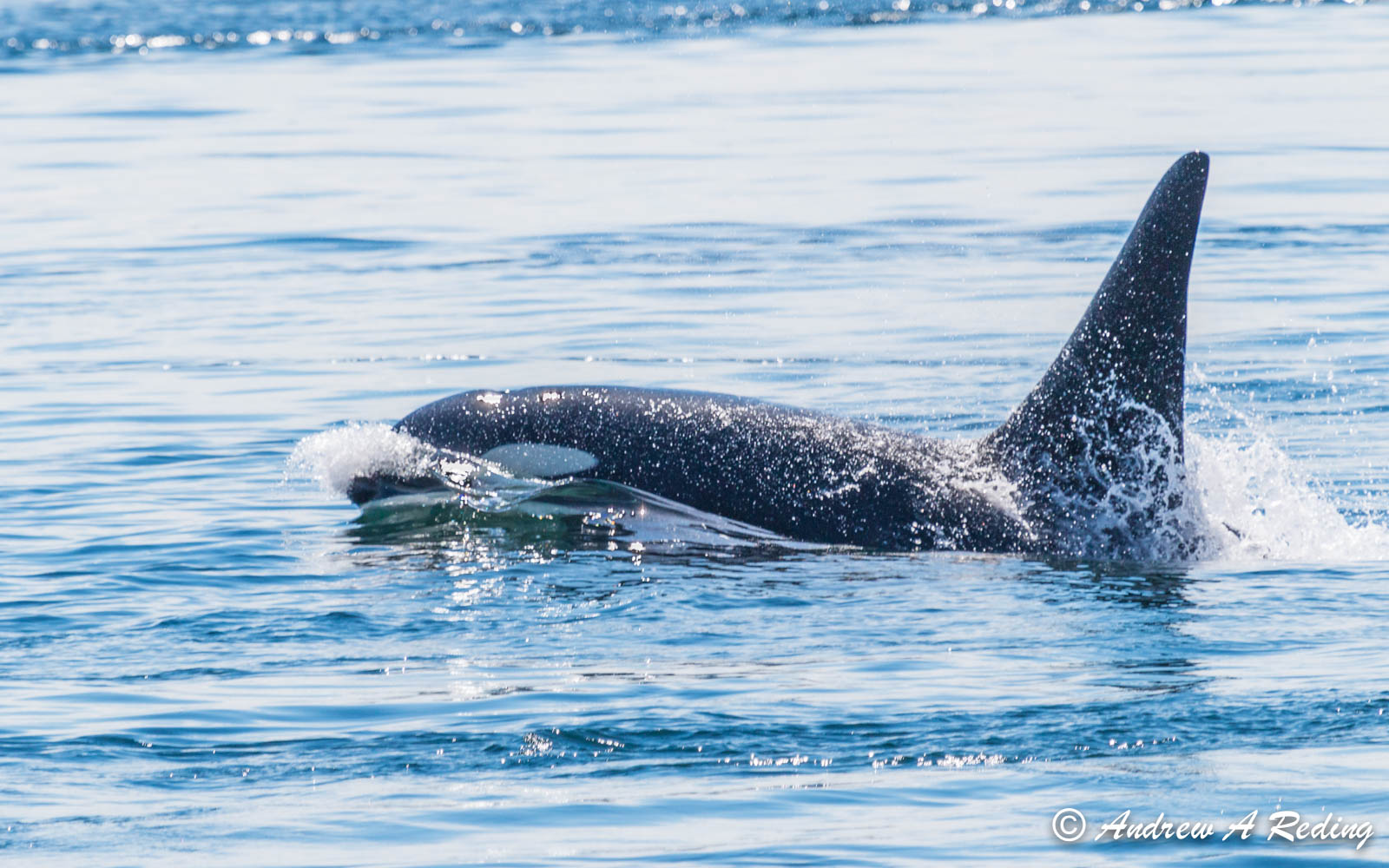
The species listed as threatened or endangered in Washington waters include Puget Sound Chinook salmon, Puget Sound steelhead, bull trout, and Southern Resident Killer Whales (SRKWs). These fish rely heavily on spawning, rearing and migrating environments, so activities like shoreline development and logging can completely wipe out generations of fish without ever “directly” killing an individual fish. Habitat degradation is a primary driver of the decline of salmon stocks in the Puget Sound region. Habitat degradation also affects the beloved and endangered Southern Resident killer whale, which depends on Chinook salmon for food, by reducing prey supply and undermining overall population viability through both short term and cumulative impacts, indirectly affecting the SRKWs ability to recover.
The Swinomish Indian Tribal Community and Squaxin Island Tribe are challenging the NMFS and the FWS’s rescinding of the definition of the term “harm” under the ESA. In their filed complaint the Tribes argue that the rescission violates the Administrative Procedure Act (APA), the APA based on Failure to consult with the Tribes, and the APA based on violation of the National Environmental Policy Act (NEPA).17
Nine environmental groups, represented by Earthjustice, are suing the administration over these changes to the ESA.18 These include the Center for Biological Diversity, Columbia Riverkeeper, Conservation Law Foundation, Conservation Northwest, Friends of the Wild Swan, Oregon Wild, Sierra Club, Swan View Coalition, and WildEarth Guardians. The suit was filed in Seattle federal court and challenges the Services’ decision to rescind the regulatory definition of “harm” that previously protected habitats from destructive modification. The ENGOs are arguing that the rescission violates the Endangered Species Act and the APA as it is contrary to law and a failure of rational decision-making, and the NEPA and the APA for failing to prepare an environmental impact statement/environmental assessment and invalid invocation of categorical exclusion.19
17–19 Swinomish Indian Tribal Community et al. v. NMFS & FWS, Complaint, July 14, 2026; Id.; Center for Biological Diversity et al. v. Burgum et al., Complaint, July 14, 2026.
You can take action too
You can take action too! Call your Senate20 and House of Representatives21 members and ask them to sponsor a bill that explicitly mirrors the old federal protections to keep habitats safe from rapid industrial development in the state of Washington.
Senate
House of Representatives
Sources & Notes
- https://www.epa.gov/laws-regulations/summary-endangered-species-act ↩︎
- 16 U.S. Code §1531(b) (“The purposes of this chapter are to provide a means whereby the ecosystems upon
which endangered species and threatened species depend may be conserved, to provide a program for the
conservation of such endangered species and threatened species, and to take such steps as may be
appropriate to achieve the purposes of the treaties and conventions set forth in subsection (a) of this
section.”) ↩︎ - 16 U.S. Code §1531(a)(1) Congress recognized the primary driver of species extinction as “economic growth
and development untempered by adequate concern and conservation.” ↩︎ - § 1538(a)(1)(B), 50 C.F.R. § 17.21(c) (endangered species); 16 U.S.C. § 1533(d), 50 C.F.R. § 17.31(a)
(threatened species). ↩︎ - 16 U.S.C. § 1532(19). ↩︎
- S. Rep. No. 93-307, at 7 (1973). ↩︎
- Babbitt v. Sweet Home Chapter of Cmtys. for a Great Oregon, 515 U.S. 687, at 696–708 (1995). ↩︎
- 91 Fed. Reg. 43300. ↩︎
- https://www.federalregister.gov/documents/2026/07/14/2026-14195/rescinding-the-definition-of-harm-
under-the-endangered-species-act ↩︎ - 91 Fed. Reg. 43306 (“[t]he Services conclude that ‘take’ applies only to an ‘affirmative act[] … directed
immediately and intentionally against a particular animal—not [an] act[] or omission[] that indirectly and
accidentally cause[s] injury to a population of animals.’” ) ↩︎ - Id. ↩︎
- Swinomish Indian Tribal Community et al. v. National Marine Fisheries Service and US Fish and Wildlife
Service, Complaint July 14, 2026; and Center for Biological Diversity et al. v. Douglas Burgum et al.,
Complaint for Declaratory and Injunctive Relief, July 14 ,2026. ↩︎ - RCW 77.15.120 – Endangered fish or wildlife – Unlawful taking – Penalty. ↩︎
- WAC 220-610 – outlines state regulations for state species and protected species under the federal ESA.
Defines criteria for classifying native wildlife as endangered, threatened, or sensitive, details rules protecting
specific animals, i.e. the bald eagle, and establishes closed seasons for federally protected fish. ↩︎ - ESA Sec. 7. ↩︎
- 40 CFR 1501.10(d)(9). ↩︎
- Swinomish Indian Tribal Community et al. v. National Marine Fisheries Service and US Fish and Wildlife
Service, Complaint July 14, 2026. ↩︎ - Center for Biological Diversity et al. v. Douglas Burgum et al., Complaint for Declaratory and Injunctive
Relief, July 14 ,2026. ↩︎ - Id. ↩︎
- Liz Lovelett contact info ↩︎
- Debra Lekanoff contact info and Alex Ramel contact info ↩︎